
Clayface is one of the clearest signs yet that DC Studios does not want its new universe locked into a single superhero formula.
Directed by James Watkins and starring Tom Rhys Harries, the theatrical release takes one of Batman’s oldest enemies and rebuilds him as the center of an R-rated body-horror tragedy rather than a conventional caped-crusader adventure.
Matt Hagen begins as a rising Gotham actor whose career and identity collapse after a gangster leaves him horribly disfigured.
A cutting-edge treatment restores his appearance, but the procedure also destabilizes his body and mind, turning a desperate attempt to reclaim his life into something increasingly monstrous.
Read: 9 Sacrifice Facts, Chris Evans Turns His Star Image Into Satire
1. Tom Rhys Harries Survived a Two-Month Casting Process Before Getting the Role
Landing Clayface was not a quick audition-and-callback situation. Tom Rhys Harries described the process as a roughly two-month “stress test,” with multiple readings and chemistry sessions before James Watkins and the production finally committed to him as Matt Hagen.
The moment he learned he had the role was appropriately surreal. Harries had gone cycling around London to clear his head from the anxiety of waiting when the call arrived that would put him at the center of a major DC Studios theatrical release.
2. Mike Flanagan Pitched Clayface Years Before the Movie Was Made
The movie began with horror filmmaker Mike Flanagan, who pitched his version of Clayface to DC Studios in March 2023.
His interest was not in turning the character into a standard supervillain spectacle, but in using Clayface’s physical transformation as the basis for a tragic horror story.
Flanagan ultimately could not direct because of commitments to his Prime Video series Carrie. James Watkins, known for Speak No Evil and Eden Lake, took over directing duties, while Hossein Amini joined Flanagan on the screenplay.
3. Mike Flanagan Has Not Even Seen the Finished Film
Despite originating the story and receiving screenplay credit, Flanagan has been unusually clear about where his involvement ended.
He handed in a script he loved, then stepped away as Watkins and the production developed the finished film without him.
That means one of the movie’s credited writers has not seen the completed result and does not regard it as “his” film in the auteur sense.
It is a revealing example of how studio filmmaking can separate the person who creates the initial blueprint from the filmmaker who finally determines the tone, imagery, pacing, and performances on screen.
4. James Watkins Looked to Sam Raimi for the Movie’s Extreme Horror Energy
The body horror was not supposed to remain solemn and tasteful. James Watkins cited Sam Raimi as an influence, particularly the way Raimi pushes gore, absurdity, fear, and humor until the audience becomes aware that the movie is intentionally crossing into extreme territory.
That influence helps explain why Clayface is being positioned differently from cleaner superhero origin stories.
Watkins wanted the audience to feel the transformation physically, but he also understood that horror can become more entertaining—not less—when the filmmaker pushes far enough that viewers recognize the audacity of what they are seeing.
Read: 10 ‘Animals’ Facts, Ben Affleck Canceled Filming Two Weeks Before Start
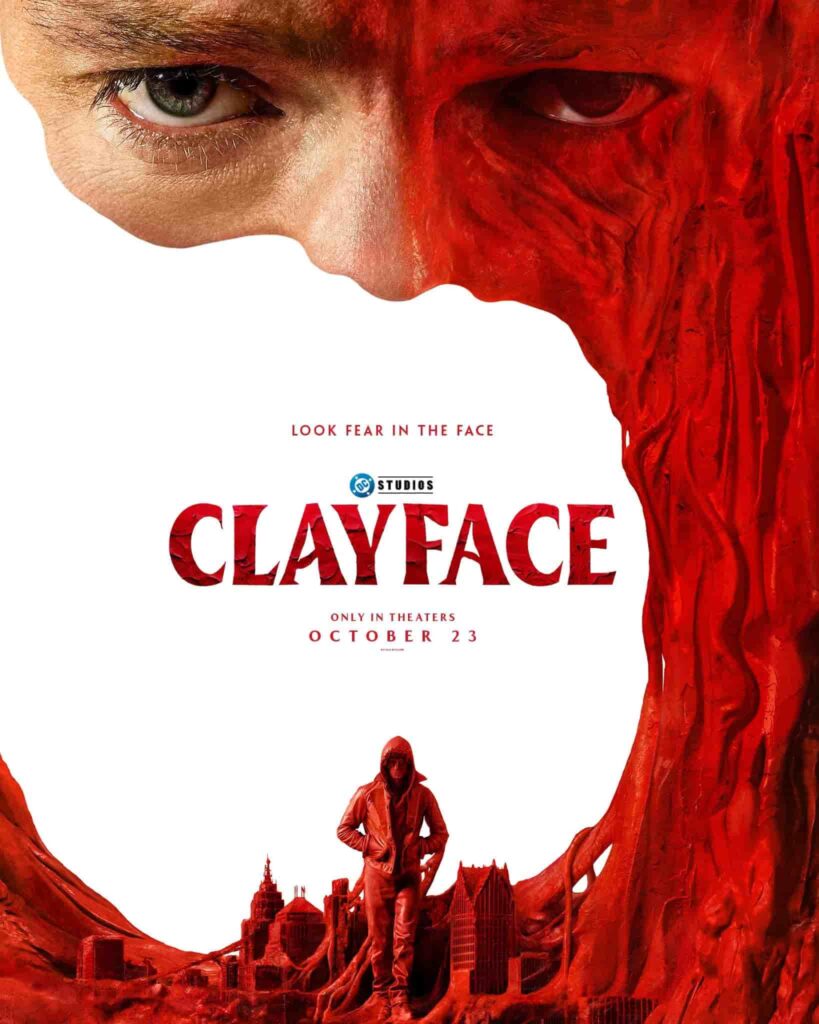
5. DC Studios Deliberately Refused to Make Clayface Feel Like Superman
James Gunn has repeatedly used Clayface as an example of the studio’s refusal to impose one visual or tonal house style across the new DC Universe.
While Superman operates as large-scale superhero adventure, Gunn described Clayface as a complete horror movie occupying the same continuity.
That difference is strategic. DC Studios wants individual writers and directors to bring distinct genre identities to interconnected projects, allowing horror, science fiction, comedy, and superhero spectacle to coexist without forcing each film into the same rhythm. Clayface is effectively the experiment that proves how far that policy can stretch.
6. The Production Turned Liverpool Into Gotham Again
Rather than building every exterior inside a studio complex, the production used Liverpool and the surrounding region as part of its Gotham City geography.
The Liverpool Film Office confirmed Clayface as a major feature production that transformed the city into Gotham and created first professional credits for numerous local trainees.
Additional filming took place across Greater Manchester, London, and Warner Bros. Studios Leavesden, allowing the film to combine practical urban locations with controlled studio work.
That approach follows a long tradition of British cities doubling for Gotham while giving Watkins access to real architecture that already carries the grime and scale the story requires.
7. The Movie Carries a Surprisingly Modest Budget for a Modern DC Theatrical Release
For a film involving shape-shifting effects, Gotham locations, a large studio infrastructure, and a recognizable comic-book property, Clayface is relatively contained financially.
Industry reporting has placed its production budget at around $40 million—far below the $150 million-plus scale associated with many contemporary superhero releases.
That smaller financial footprint fits the genre strategy. A body-horror thriller does not need to behave like a global-destruction blockbuster, and the lower budget gives DC Studios more room to make something strange, R-rated, and specific without requiring the film to perform like a Batman or Superman tentpole at the box office.
8. The Full Clayface Transformation Was Deliberately Kept Out of the Marketing
The trailers reveal plenty of disturbing imagery—faces without mouths, warped features, shifting flesh—but the production has intentionally withheld Matt Hagen’s complete final form.
James Watkins compared the strategy to not revealing the shark too early: once audiences see everything, some of the tension disappears.
Tom Rhys Harries has been even more enthusiastic about what viewers have not seen, describing the final design in extremely excited terms while agreeing that the reveal belongs in the theater.
The marketing therefore treats Clayface less like a superhero costume to showcase and more like a horror creature whose impact depends on anticipation.
FAQ: Popular Questions About Clayface
Is Clayface part of the new DC Universe?
Yes. Clayface is part of the main DC Studios continuity rather than the separate Batman universe led by Robert Pattinson.
Who plays Clayface in the 2026 movie?
Tom Rhys Harries plays Matt Hagen, the actor who becomes Clayface after a catastrophic disfigurement and experimental treatment.
When does Clayface release in theaters?
Clayface opens in North American theaters on October 23, 2026, with international rollout beginning October 21.
Final Thoughts on Clayface
Clayface turns a supervillain origin into a story about losing control of the face, body, and identity that once defined a person’s value.
For an actor like Matt Hagen, whose career depends on being watched, physical transformation becomes especially cruel because the thing destroying him is also the thing giving him impossible new power.
By letting James Watkins approach the character as horror instead of forcing him into a standard superhero mold, DC Studios is using Clayface to test how elastic a shared universe can actually become.
When it reaches theaters, share which transformation scene hits hardest—or whether you prefer the tragic actor underneath the monster.
1 thought on “8 Facts About Clayface, Liverpool Became Gotham Once Again”
Comments are closed.