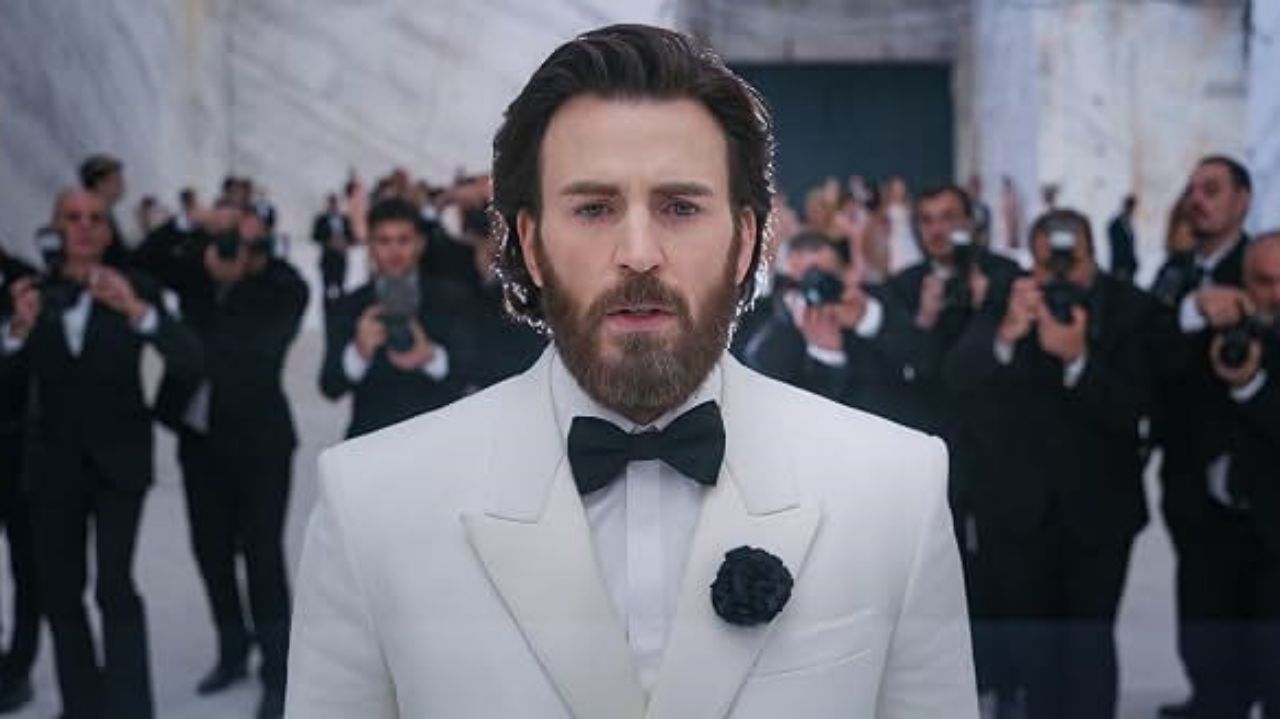
Sacrifice takes celebrity culture, environmental anxiety, religious conviction, and Greek mythology and throws them into one deliberately unruly dark comedy.
Directed by Romain Gavras and led by Chris Evans, Anya Taylor-Joy, Vincent Cassel, and Salma Hayek Pinault, the Netflix movie turns a luxurious charity gala into a hostage crisis driven by a volcanic prophecy.
Washed-up movie star Mike Tyler arrives at an environmental fundraiser expecting publicity and perhaps a career reset. Instead, Joan and her followers seize the event because they believe three human sacrifices must be delivered to a volcano to prevent catastrophe.
The movie’s increasingly strange journey was matched by a production that took its stars into mines, caves, and volcanic landscapes across three countries.
Read: 10 ‘Animals’ Facts, Ben Affleck Canceled Filming Two Weeks Before Start
1. Sacrifice Is Romain Gavras’s First English-Language Feature
After making French-language films including Our Day Will Come, The World Is Yours, and Netflix’s Athena, Romain Gavras used Sacrifice as his English-language feature debut.
He co-wrote the screenplay with Will Arbery, whose television work includes HBO’s Succession.
The shift in language did not mean abandoning the director’s taste for heightened imagery. If anything, the larger international ensemble gave him room to push further into broad comedy, violence, celebrity satire, and mythological scale without settling comfortably into one genre.
2. The Movie Grew From Stories Costa-Gavras Told His Son as a Child
The mythology underneath Sacrifice has a personal origin. Romain Gavras grew up hearing his father, filmmaker Costa-Gavras, tell stories about gods, heroes, Mount Olympus, and the Underworld.
Those memories shaped his belief that mythology allows emotions and violence to operate at an intentionally exaggerated level.
When Gavras and Will Arbery developed the screenplay, their influences stretched from ancient Greek myths to Joan of Arc.
Then they noticed something unexpectedly familiar: the story had begun resembling The Lord of the Rings, with a group making an increasingly extreme journey toward a volcano.
3. Yung Lean Was the First Person Cast—even Though He Was Not an Actor
One of the strangest casting stories belongs to Swedish musician Yung Lean, who plays Arthur. Gavras had known him since he was 16 and thought of him while the screenplay was still being written.
He called the musician directly and told him he had a role despite knowing that Yung Lean was not a conventional actor.
That made him the first person cast in the movie. The choice also reflects Gavras’s background in music videos, where personality and visual presence can matter as much as traditional dramatic technique.
Instead of building the ensemble exclusively from established film actors, he deliberately pulled someone from a different creative world into the mythology.
4. Charli XCX Joined Because the Film Became a Project Among Longtime Friends
Charli XCX appears in a small role as Mother Nature, but her involvement was not the result of a conventional casting search.
Gavras has been friends with both her and Yung Lean for years and felt that including her fit the spirit of friends making something deliberately strange together.
Her cameo also reinforces the movie’s collision between pop iconography and mythology. The cast contains major Hollywood stars, international actors, musicians, and performers from very different corners of entertainment—all gathered inside a story satirizing the spectacle built around wealthy and famous people.
5. Chris Evans Was Cast Because He Could Play With His Own Movie-Star Image
Mike Tyler is not simply an actor played by an actor. Gavras specifically wanted Chris Evans because he believed Evans understood his public image, his relationship with ego, and the absurdity that can come with celebrity. He was particularly interested in the actor’s comedic timing.
The director then exaggerated those qualities for Mike, treating the character almost like a mythic version of a movie star.
That makes the casting part of the joke: viewers arrive carrying years of associations with Evans, and the film can use that familiarity while presenting a fading action hero desperate to rediscover some kind of purpose.
Read: 7 The Scandal Facts, When Desire Collides Wth Joseon Rules
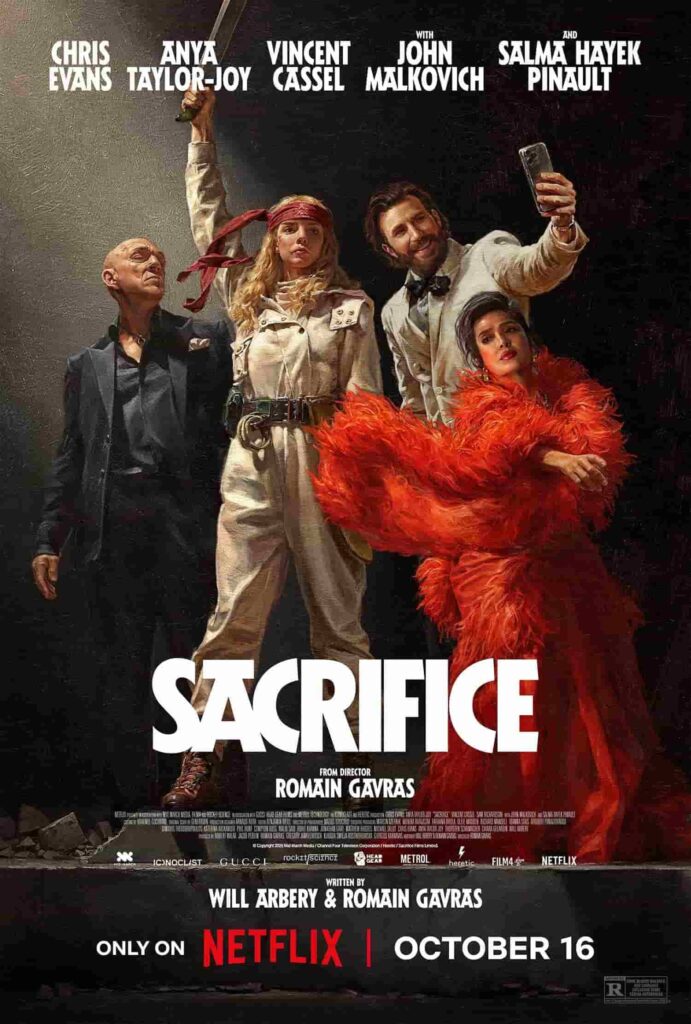
6. Anya Taylor-Joy Had Been on the Director’s Radar Since The Witch
Joan needed a completely different type of screen presence. Gavras had admired Anya Taylor-Joy since The Witch and felt that she possessed an unusual, almost otherworldly quality that could make the cult leader visually convincing before the character even explained herself.
He was also looking for an actor who could hold strength and vulnerability in the same performance. Joan may be willing to take people hostage and march them toward a volcano, but the movie cannot work if she feels like a flat fanatic.
Taylor-Joy’s casting was designed to keep the character strange, commanding, and emotionally legible at the same time.
7. Vincent Cassel Changed How His Billionaire Character Was Viewed
Sacrifice marks the third collaboration between Romain Gavras and Vincent Cassel, whose relationship with the filmmaker stretches back to Our Day Will Come, which Cassel also produced.
When Gavras gave him the new screenplay, he expected the billionaire Ben Bracken to register as one of the story’s less sympathetic figures.
Cassel saw him differently. He argued that Ben understood the world around him, spoke plainly, and genuinely loved his wife.
Gavras liked that interpretation enough to embrace it, allowing the actor to complicate a character who could easily have become a one-note symbol of billionaire hypocrisy.
8. The Production Took 200 People in Evening Wear Into a Real Mine
The opening charity event looks like the sort of glamorous gathering that should have been built safely on a soundstage.
Instead, Gavras took the production into a mine in northern Greece and brought roughly 200 extras dressed for a gala along with the principal cast.
That collision between formal clothing and harsh industrial geography was intentional. The movie is constantly placing luxury, celebrity, and environmental rhetoric against landscapes that feel older and more powerful than the people occupying them.
Shooting in a real mine gave that contradiction physical weight rather than leaving it to production design alone.
9. Reaching the Volcano Required an Hour-Long Climb and Gear Carried by Donkeys
The production eventually became even less convenient. Sacrifice was filmed on location across Greece, Bulgaria, and Iceland, including scenes involving an actual volcanic environment.
Each morning during one particularly difficult stretch, cast and crew had to climb for almost an hour while production equipment traveled with the help of donkeys.
Gavras believed the hardship improved the performances because the actors were physically present inside landscapes that could not be convincingly reproduced in an ordinary studio.
The cast later described the demanding night shoots and shared location work as having a strange summer-camp quality—a group repeatedly exhausted together, but also unusually bonded by the experience.
FAQ: Popular Questions About Sacrifice
Is Sacrifice based on a book?
No. Sacrifice is an original screenplay by Romain Gavras and Will Arbery, drawing inspiration from Greek mythology, Joan of Arc, and other mythic storytelling traditions.
How long is Sacrifice?
Sacrifice runs approximately 100 minutes.
When and where can you watch Sacrifice?
Sacrifice begins streaming on Netflix on October 16, 2026, in the United States and France.
Final Thoughts on Sacrifice
Sacrifice places two extreme responses to a damaged world side by side. One group turns environmental concern into glamorous performance; another believes so completely in its cause that individual lives become expendable.
Between them sits Mike, a professional performer forced to decide whether any part of his identity still exists without an audience.
The result gives Romain Gavras room to combine celebrity satire, mythology, dark comedy, and enormous natural landscapes without making them behave politely together.
When Sacrifice reaches Netflix, share which performance or location stayed with you most—and whether you would have followed Joan anywhere near that volcano.
1 thought on “9 Sacrifice Facts, Chris Evans Turns His Star Image Into Satire”
Comments are closed.