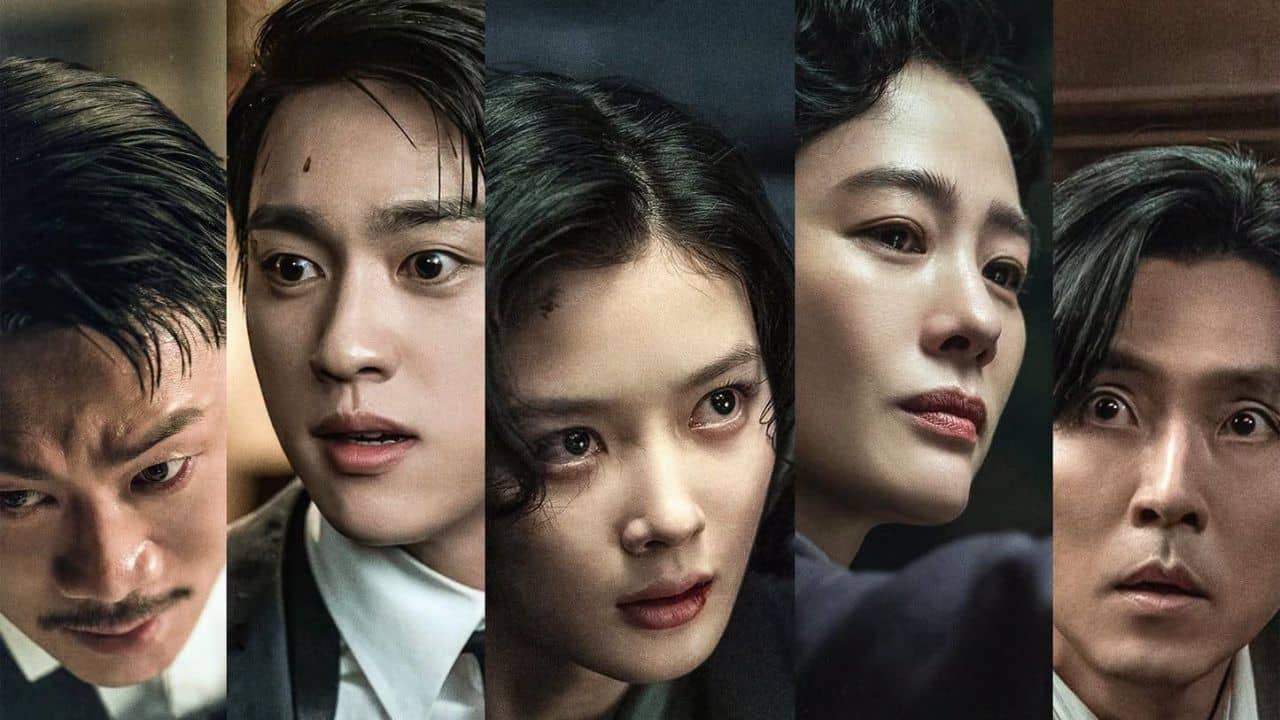
100 Days of Deception arrives as one of tvN’s major 20th-anniversary dramas, combining espionage, romance, political danger, and personal reinvention in 1932 Gyeongseong.
Directed by Yoo In-shik, the filmmaker behind Extraordinary Attorney Woo and the Dr. Romantic series, the drama brings Kim You-jung, Park Jinyoung, Kim Hyun-joo, Lee Moo-saeng, and Jin Sun-kyu into a world where language itself can become a weapon.
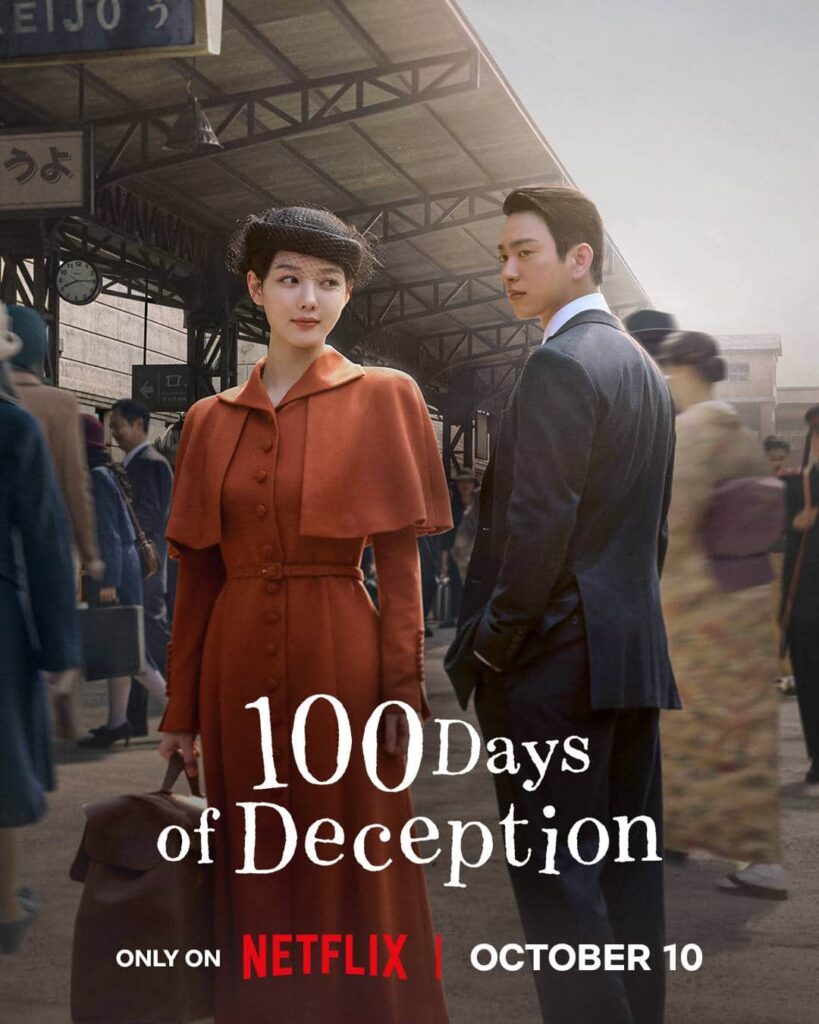
Lee Ga-gyeong is Gyeongseong’s most skilled pickpocket before an independence organization recruits her for a far more dangerous theft: infiltrating the Japanese Government-General as an interpreter trainee.
Inside, she encounters elite interpreter Kim Tae-woong, also known as Sato Hideo, whose own identity is divided between languages, loyalties, and family.
The production behind that premise demanded far more than period costumes—its actors trained in pickpocket choreography, foreign languages, physical discipline, and historical behavior while the crew rebuilt a world that barely survives in modern Korea.
Read: 8 Take Charge of My Heart Facts, From Manga Energy to Rom-Com Nerves
1. Kim You-jung Trained With the Action Team—and Became Disturbingly Good at Pickpocketing
Playing Gyeongseong’s best pickpocket meant Kim You-jung could not simply reach into a coat pocket and rely on editing.
The action team mapped out the movements required for Ga-gyeong’s theft scenes, giving the actress specific physical choreography to practice on set.
The funny part came after repetition. Kim You-jung joked that she discovered she had a little talent for the technique, adding that once the crew watched her practice and film the scenes, staff members started paying closer attention to their own pockets.
She made clear that the training stayed on set—no unsuspecting subway passengers were used for practice.
2. Park Jinyoung Practiced Japanese Until He Felt His Mouth, Not His Brain, Had Memorized It
Kim Tae-woong is not merely bilingual. As an elite Government-General interpreter, the character moves between Korean, Japanese, and English, making language central to both his profession and his identity.
For Park Jinyoung, that meant dialogue preparation far beyond memorizing lines phonetically.
His solution was relentless repetition. Park Jinyoung said he practiced until the foreign-language lines could come out almost automatically—as though his mouth had memorized them before his brain needed to think.
He also kept rehearsing during production rather than treating language coaching as something completed before cameras rolled.
3. Jin Sun-kyu Lived in Japan for Two Months and Studied His Script Seven Hours a Day
Jin Sun-kyu took an even more extreme route for Sato Shinichi, a powerful Japanese official whose command of Japanese needed to sound convincing within the drama’s world. The actor had not even known hiragana or katakana when preparation began.
He moved to Japan for roughly two months early in 2026 and spent around seven hours a day working repeatedly through the script.
The commitment was tied directly to character: Shinichi is someone desperate for recognition from Japan, so weak or hesitant Japanese would have undermined a major part of his identity.
Jin Sun-kyu kept working with language instructors because he felt anything less would leave him far behind what the role required.
4. The Actors Were Not Supposed to Speak Foreign Languages in the Same Way
Language accuracy was only the starting point. Kim You-jung explained that the production worked with language advisers to develop differences in how individual characters used foreign languages, including variations in tone and direction that reflected who they were and where they stood socially.
That detail fits writer Rheu Bo-ri’s larger concept. She saw interpretation as inherently dramatic because interpreters can hear another person’s truth and secrets, but they can also alter that truth while passing it to someone else.
The fact that characters possess unequal language abilities creates an information imbalance—a particularly useful weapon in a spy story built around hidden identities.
5. Rebuilding 1932 Gyeongseong Was Harder Because So Little of It Still Exists
Historical accuracy presented a physical problem before filming even began: much of the architecture required for a 1932 Gyeongseong story no longer exists.
Yoo In-shik said the shortage of surviving buildings and spaces placed considerable pressure on the art department, particularly when recreating places tied to the Japanese colonial administration.
The production consulted the memories of people familiar with surviving accounts of the period, including rare recollections connected to the former Government-General building’s interior, and tried to avoid contradicting what could still be remembered or documented.
Lee Moo-saeng later singled out the sets and costumes as major attractions of the finished series, emphasizing the amount of labor visible in the period world around the actors.
Read: 9 Facts About Doctor X: Mafia in White, How Noir Met Medicine
6. Park Jinyoung Built Tae-woong’s Trauma Into His Posture Instead of Playing It Outwardly
Tae-woong carries multiple identities, languages, and loyalties, but Park Jinyoung decided that displaying every internal conflict openly would make the character feel too obvious.
He instead leaned toward emotional restraint, allowing uncertainty to remain beneath the surface rather than announcing it in every scene.
Physical behavior became part of that restraint. Tae-woong has spent years under the controlling influence of his adoptive father, and Park Jinyoung paid attention to posture and bodily discipline as signs of that upbringing.
The performance was therefore designed around containment: an interpreter trained to control language is also a man trained to control himself.
7. Kim You-jung Had to Learn Languages While Playing a Character Who Is Learning Them Too
For Kim You-jung, the foreign-language challenge had a useful dramatic wrinkle. Ga-gyeong enters the Government-General as an interpreter trainee rather than an already polished linguistic professional, giving the actress room to incorporate learning and uncertainty into the character’s progression.
She initially found the prospect of foreign-language acting frightening, but the fear gradually turned into curiosity.
Kim You-jung said she came to appreciate the opportunity to study something she might never otherwise have learned, working closely with advisers and Yoo In-shik to connect the language work to Ga-gyeong’s personality rather than treating it as an isolated technical requirement.
8. Writer Rheu Bo-ri Built the Entire Drama From a Historical “What If?”
The central espionage premise began with a counterfactual question rather than an existing novel or webtoon.
Rheu Bo-ri imagined what might happen if an independence organization had managed to plant its own spy inside the very center of Japanese colonial administration.
From there came Ga-gyeong: a young pickpocket society dismisses as insignificant, sent to destabilize people occupying the highest levels of power.
The writer described that “what if” as both cathartic and potentially comforting, while also confronting herself with a much less comfortable question: whether an ordinary person could truly risk a life, family, and future for independence that might not arrive until after their death.
That tension between heroic history and private fear became part of the drama’s emotional foundation.
9. Yoo In-shik Argued That the Story Needed 16 Episodes Because Everyone Changes
At a time when many streaming-era K-dramas have moved toward shorter episode counts, 100 Days of Deception deliberately uses a 16-episode structure.
Yoo In-shik said 10 or 12 episodes would not have given the production enough room for what the story was trying to trace.
His priority was transformation. The director wanted to follow how each major figure changes under the pressure of the era and, more importantly, what pushes someone toward a particular choice.
That focus matches Rheu Bo-ri’s writing style, which Yoo In-shik praised for carefully examining the reasons behind human decisions rather than reducing characters to fixed heroes, villains, or romantic archetypes.
FAQ: Popular Questions About 100 Days of Deception
How many episodes does 100 Days of Deception have?
100 Days of Deception has 16 episodes.
Is 100 Days of Deception based on a webtoon or novel?
No. 100 Days of Deception is an original television story written by Rheu Bo-ri, rather than an adaptation of a webtoon or novel.
Where can you watch 100 Days of Deception?
100 Days of Deception airs on tvN in South Korea and streams internationally on Netflix.
Final Thoughts on 100 Days of Deception
100 Days of Deception turns lying into something more complicated than simple betrayal.
Its characters conceal names, loyalties, languages, and motives because survival under occupation often demands that what someone says and what someone believes remain dangerously far apart.
The drama’s emotional question is not merely who is telling the truth, but what kind of person each character becomes while living inside a lie.
That combination of historical reconstruction, espionage, multilingual performance, and romance gives tvN a period drama whose production choices are closely tied to its themes rather than simply decorating them.
Share your favorite scene in the comments—or tell us which character’s hidden identity has you most curious.