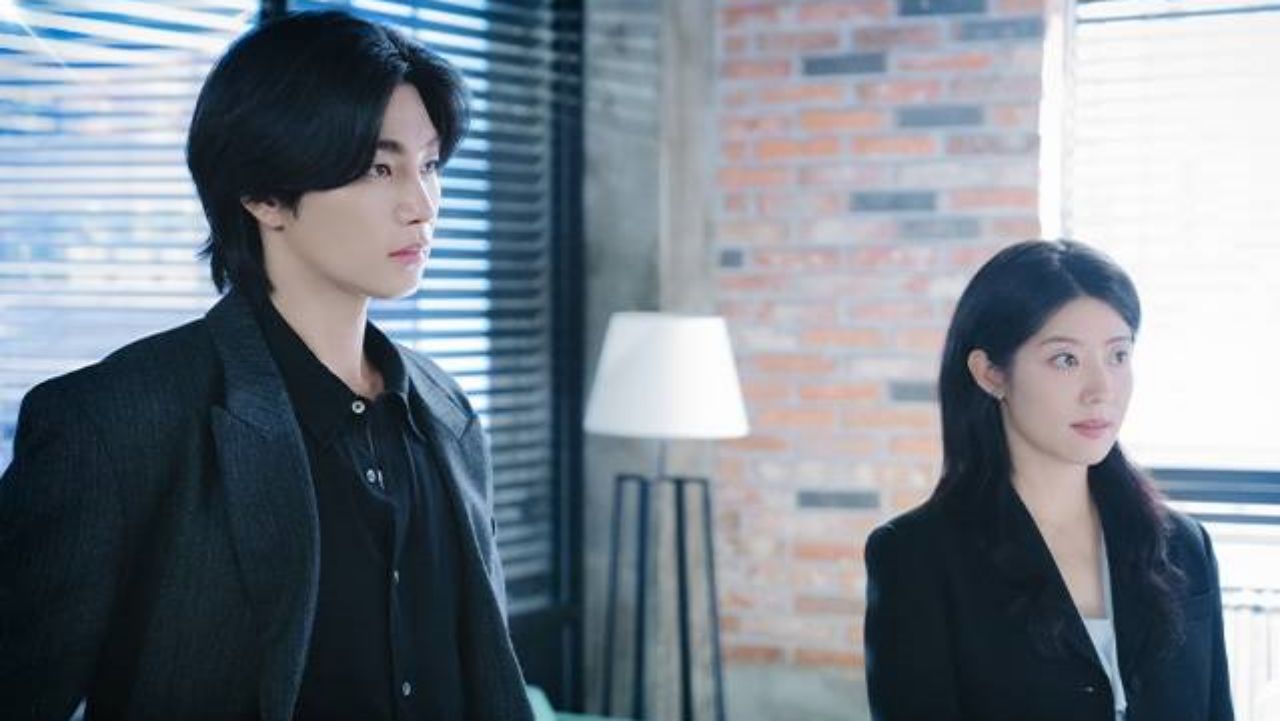
Make Me Tingle takes one of romantic comedy’s oldest engines—two people who believe completely different things about love—and places it inside a workplace most K-drama heroines would never expect to enter.
Led by Nam Ji Hyun and Kim Jae Yeong, the TVING original pairs an intensely traditional marketer with the CEO of a sex-toy startup, using their collision to examine intimacy, prejudice, and the assumptions people rarely question until somebody challenges them.
Gong Yeon Su has built her life around rules, while Dokgo Dal believes relationships do not need a single correct formula.
After an awkward blind date, they unexpectedly meet again as marketer and client, forcing both characters to spend time inside a worldview they initially reject.
The production’s most interesting early stories reveal that those ideological clashes were already creating reactions before the cameras properly started rolling.
Read: 9 Facts About 100 Days of Deception, Language Became an Espionage Weapon
1. The Script Reading Started a Genuine “Who Is Right?” Debate
The central disagreement was strong enough to escape the screenplay. During the script reading, the production team said that whenever Yeon Su and Dokgo Dal’s radically different ideas about love collided, people in the room naturally began taking sides over which character actually had the better argument.
That is a useful clue to the drama’s intended tone. The conflict was not designed simply to make one conservative character look outdated and one liberal character automatically correct.
Instead, the writing gave both positions enough weight to provoke discussion among the people making the series themselves.
2. Nam Ji Hyun and Kim Jae Yeong Established Their Opposites Through Voice Before Filming
Their contrast was audible from the first table read. Nam Ji Hyun delivered Yeon Su’s lines with a firm, confident tone that reflected the character’s rigid romantic principles, while Kim Jae Yeong used a more relaxed delivery to capture Dokgo Dal’s refusal to treat relationships as something governed by fixed rules.
Once the characters began arguing, that difference in rhythm produced the comic back-and-forth the series depends on.
The production team noted that the bickering was already generating both laughs and romantic tension in the room, giving the pairing a working dynamic before the finished scenes existed.
3. Nam Ji Hyun Chose the Role Because Yeon Su Is Willing to Challenge Herself
The contradiction inside Yeon Su is what caught Nam Ji Hyun’s attention. The actress described her as stubborn but not closed-minded: she can distrust unfamiliar ideas while still asking herself why she reacts that way.
What ultimately persuaded Nam Ji Hyun to join the project was watching the character grow by confronting things instead of simply avoiding them.
That distinction keeps Yeon Su from becoming a one-note “conservative girl” stereotype. Her principles are real, but so is her curiosity.
The performance was built around someone discovering that questioning a belief does not automatically mean abandoning everything she values.
Read: 8 Take Charge of My Heart Facts, From Manga Energy to Rom-Com Nerves
4. Marketing Sex Toys Became Yeon Su’s First Real Act of Rebellion
One of the drama’s boldest plot devices has a surprisingly personal meaning for Nam Ji Hyun. She interpreted Yeon Su’s decision to enter marketing partly as protection against remaining trapped inside the small world she grew up in.
Taking on the adult-product campaign therefore becomes far more than an embarrassing work assignment.
The actress described applying for work connected to Dokgo Dal’s company as something close to the first rebellion of Yeon Su’s life.
That makes the startup setting part of the character arc rather than a novelty backdrop: every uncomfortable product, conversation, and mistake forces her farther beyond the boundaries she inherited.
5. Nam Ji Hyun Changed Yeon Su Depending on Who Was Standing Across From Her
Instead of searching for one fixed personality and applying it to every scene, Nam Ji Hyun centered the performance on sincerity.
She reasoned that Yeon Su experiences so much conflict because she takes family, work, and relationships seriously rather than moving through them casually.
She also deliberately adjusted Yeon Su’s behavior depending on the person she was interacting with. Home, work, friendship, and romance therefore bring out different versions of the same woman.
That performance choice fits a story about identity particularly well: the drama is not only asking what Yeon Su believes, but which parts of herself she has learned to present in different environments.
6. The Production Turned “Growth” Into a Sexual Pun
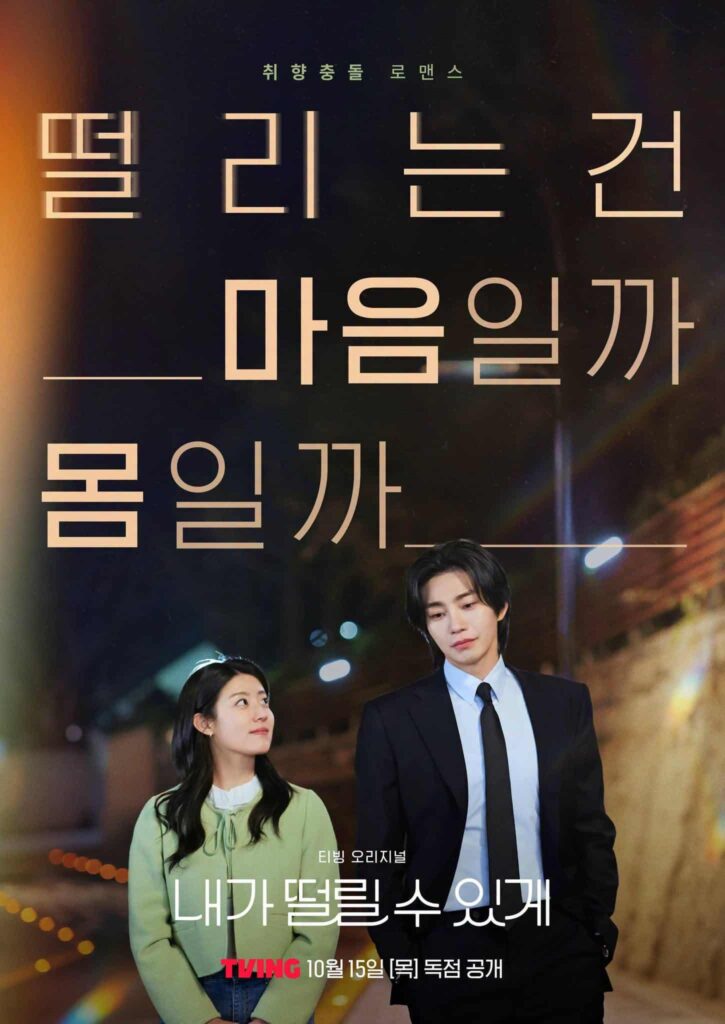
Even the Korean promotional language contains the drama’s central joke. TVING describes Make Me Tingle as a “성(性)장 romance,” playing on the Korean word for growth while inserting the character meaning “sex” into it.
The wordplay condenses the entire premise into a single idea: emotional maturation is happening through conversations about physical intimacy that Yeon Su would previously have avoided.
Dokgo Dal’s company is treated with the same matter-of-fact philosophy. His character views sex toys as ordinary consumer products rather than inherently scandalous objects, and promotional material shows him monitoring stores and consumer response as part of running the business.
The humor comes from Yeon Su entering that environment—not from the production pretending the company itself is absurd.
FAQ: Popular Questions About Make Me Tingle
How many episodes does Make Me Tingle have?
Make Me Tingle has 10 episodes.
Who directed Make Me Tingle?
Make Me Tingle was directed by Kim Ye Ji, with the screenplay credited to Ahn Sae Bom.
Where can you watch Make Me Tingle?
Make Me Tingle streams on TVING in South Korea and is available through Rakuten Viki in supported international regions.
Final Thoughts on Make Me Tingle
Make Me Tingle uses an intentionally provocative workplace to explore a quieter question: how much of a person’s idea of love comes from genuine preference, and how much has simply been inherited without examination?
Yeon Su and Dokgo Dal begin at opposite ends of that argument, but the more interesting territory lies in what happens when certainty starts becoming curiosity.
For a romantic comedy, that gives the series more to play with than simple opposites-attract chemistry.
If Make Me Tingle has caught your attention, share which character’s view of love you understand more—or which scene you are most curious to see.