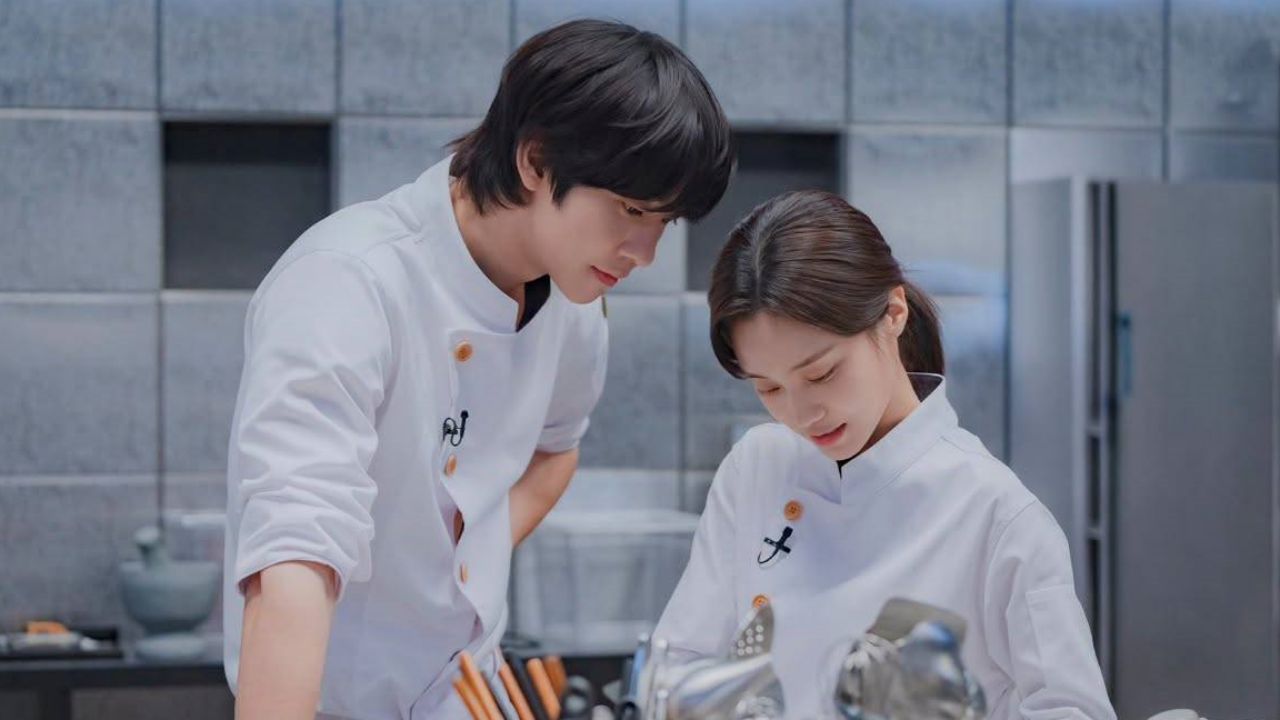
Final Table turns the current appetite for cooking competitions into a scripted K-drama built around professional ambition, family legacy, and chefs whose personal histories matter almost as much as what lands on the plate.
Led by Ahn Hyo Seop, Hong Hwa Yeon, Chang Ryul, and Jung Yoo Jin, the JTBC series places its characters inside “The Table: K-Chef 2026,” a fictional survival show designed to feel close enough to reality television that the audience can experience both formats at once.
Kang Han is an internationally experienced chef with a restless personality and a cooking style shaped by techniques gathered around the world, while Choi Song Yi is trying to save the restaurant her father left behind.
Their path eventually collides with perfectionist chef Cha Woo Jin, turning the competition into a clash between instinct, discipline, reputation, and memory.
The production stories released so far reveal that the drama’s culinary credibility began long before the first dish reached the fictional judges.
Read: 7 Facts About Oh! My Guard, A Four-Year Delay Changed Everything
1. Ahn Hyo Seop Focused Heavily on Knife Skills Before Playing a Professional Chef
A chef’s hands can expose an actor instantly. Ahn Hyo Seop, who is playing a chef for the first time in his career, began preparing by concentrating specifically on cooking practice and knife work rather than treating food scenes as something that could be hidden through editing.
He found the repetitive work unexpectedly satisfying, saying that knife practice helped clear his mind and sharpen his concentration.
The humility remained, though: when asked to judge his abilities against the standard of an actual professional chef, he placed himself below half a point and admitted he still had a long way to go.
2. His Training Accidentally Produced a Favorite Dish
Preparation did not stay confined to professional-looking technique. During the same training period, Ahn Hyo Seop repeatedly made spring cabbage bibimbap and identified it as the dish he felt most comfortable preparing at the time.
He had already cooked and eaten it four or five times by the time he discussed the role publicly.
It is a small detail, but a useful one. Actors playing chefs often talk about complicated plating or knife choreography; here, one of the clearest signs of practice was simply repetition at home.
The character may operate at elite culinary level, but the actor’s route toward that confidence began with a dish he could make again and again without pretending he had become a professional overnight.
3. The Script Reading Already Required Ahn Hyo Seop to Work Across Multiple Languages
Kang Han’s international background was built into the performance before production moved fully into the kitchen.
At the script reading, Ahn Hyo Seop delivered dialogue in multiple languages naturally, reinforcing the character’s history of moving through restaurants around the world.
The reading also tested a second kind of credibility: competition confidence.
When Kang Han presents his cooking to judges, Ahn Hyo Seop shifted into a sharper, more controlled performance, using stillness and concentration to sell the authority of someone accustomed to professional scrutiny.
Even without finished food photography, the room was already being asked to believe he belonged at the head of a kitchen.
Read: 6 Wild Eyes: The Woman of the Prince Facts, CHUU Became an Assassin
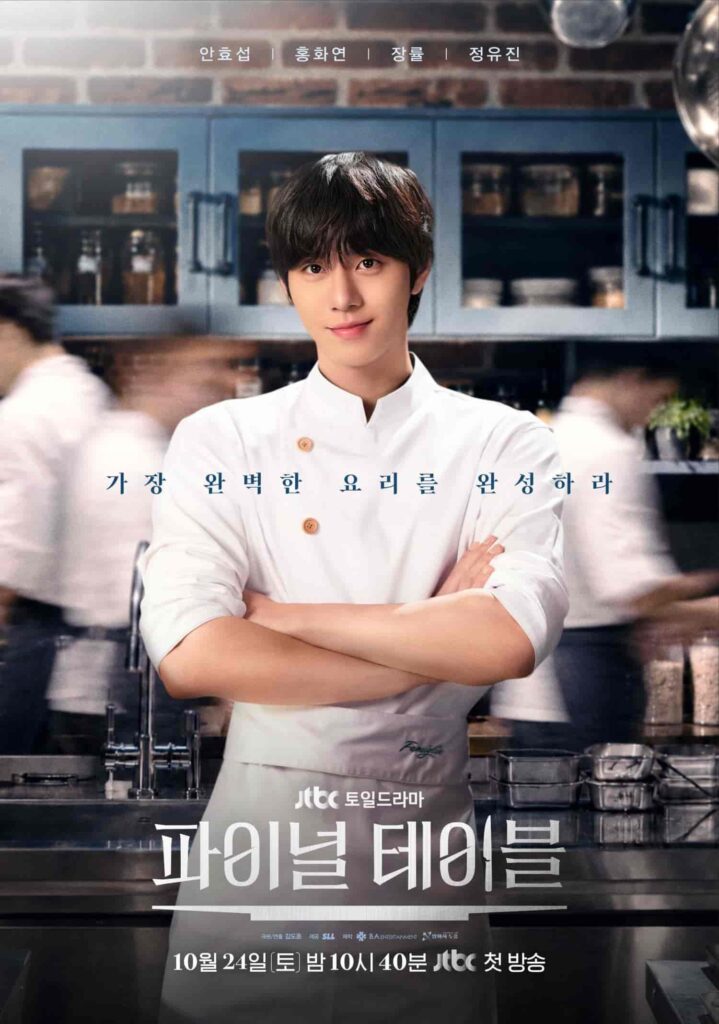
4. The Fictional Competition Was Designed to Feel Like a Real Variety Show
The producers did not want “The Table: K-Chef 2026” to function like a generic drama backdrop.
JTBC described the competition as being structured in a variety-show format so viewers could experience the sensation of watching a genuine cooking survival program inside the scripted series.
That decision changes how the food scenes have to work. The drama cannot rely only on close-ups of beautiful plates; it needs the pacing, pressure, judging rhythm, and visual spectacle associated with unscripted culinary television.
JTBC’s promotional material has consistently emphasized highly technical dishes and visually striking cooking as part of the show’s appeal, suggesting that food is being treated as spectacle rather than mere set dressing.
5. The Rival Chefs Were Built Around Opposite Creative Philosophies
Kang Han and Cha Woo Jin are not simply rivals because the plot needs two talented chefs to compete. Their cooking styles were designed as opposites.
Kang Han relies on instinct, aesthetic sensitivity, and techniques absorbed from different countries, while Woo Jin is defined by repetition, precision, routine, and an almost intolerant perfectionism.
That contrast extends beyond personality into how the audience is meant to read their food. Kang Han’s dishes are flexible and difficult to contain inside one national style; Woo Jin’s are controlled and exact.
The production can therefore stage the rivalry visually, not just through dialogue: two plates responding to the same challenge can reveal two completely different philosophies before either chef says a word.
FAQ: Popular Questions About Final Table
How many episodes does Final Table have?
Final Table has 12 episodes.
Who directed Final Table?
Final Table is written and directed by Kim Do Hoon.
Where can you watch Final Table?
Final Table airs on JTBC in South Korea, streams domestically on Disney+, and is available internationally through Prime Video in supported regions.
Final Thoughts on Final Table
Final Table treats cooking as more than a competition of technical skill. The drama is interested in what a chef carries into a dish—training, ego, grief, discipline, memory, and the need to prove something that cannot always be expressed in words.
By combining scripted character drama with the visual grammar of a cooking-survival show, JTBC is positioning the series somewhere between workplace drama and culinary spectacle.
Share which chef or cooking style catches your attention first, and tell us which competition scene you are most excited to watch.