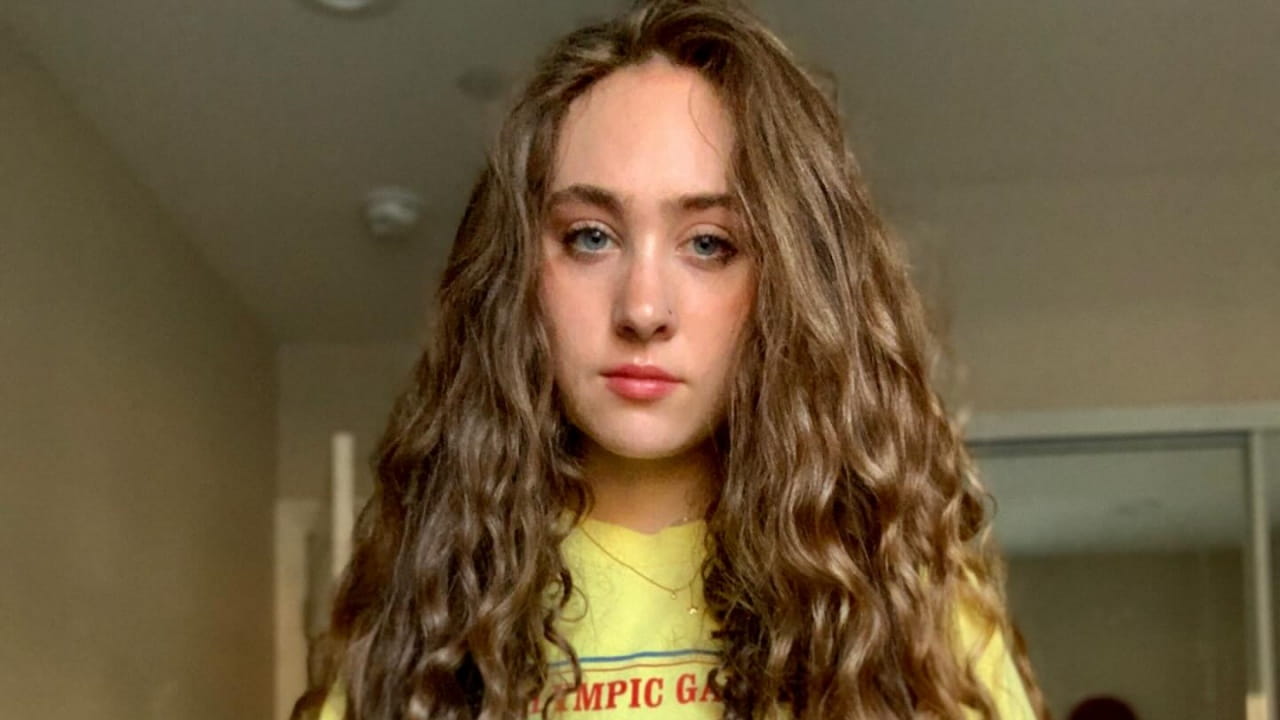
Chappell Roan has built one of pop music’s most recognizable identities by pairing powerhouse vocals with camp, drag-inspired fashion and carefully constructed stage characters.
The Missouri-born singer turned The Rise and Fall of a Midwest Princess into a long-running success, won the Grammy for Best New Artist, and continued that momentum with “The Giver” and “The Subway.”
Who Is Chappell Roan?
Chappell Roan is an American singer-songwriter and theatrical pop performer known for songs including “Pink Pony Club,” “HOT TO GO!,” “Good Luck, Babe!,” and “The Subway.”
Born Kayleigh Rose Amstutz in Willard, Missouri, she spent years developing her music before the colorful, drag-influenced Chappell Roan persona reached a global audience; her 2025 Best New Artist Grammy and subsequent Grammy nominations for “The Subway” cemented that transition from cult favorite to major pop presence.
For a quick overview, here are the essential details behind the Midwest-born songwriter’s public profile.
- Real Name: Kayleigh Rose Amstutz.
- Stage Name: Chappell Roan.
- Popular Name: Chappell Roan.
- Hometown: Willard, Missouri, United States.
- Date of Birth: February 19, 1998.
- Zodiac Sign: Pisces.
- Height: Approximately 156 cm (5 feet 1½ inches).
- Estimated Net Worth: Around $12 million
- Main Occupations: Singer, songwriter, recording artist, and live performer.
- Fashion Style: Camp, theatrical glam, drag-inspired beauty, historical references, glam-punk, fantasy costuming, and avant-garde red-carpet fashion.
- Instagram: @chappellroan.
- TikTok: @chappellroan.
- YouTube: Chappell Roan.
- X: @ChappellRoan.
- Official Website: iamchappellroan.com.
How Old Is Chappell Roan?
Chappell Roan is 29 years old in 2027. She was born on February 19, 1998, in Willard, Missouri, placing her under Pisces in the traditional Western zodiac calendar.
Popular astrology often associates Pisces with imagination, emotional sensitivity, intuition, and a willingness to inhabit fantasy.
Those descriptions happen to fit the theatrical side of her public work surprisingly well: Chappell Roan rarely approaches a performance as simply a singer standing beside a microphone.
Characters, costumes, makeup, choreography, humor, and dramatic visual references are routinely folded into the music.
The more tangible explanation for that creative range, however, lies in years of experimentation. Long before awards and arena-sized audiences entered the picture, the Missouri-born artist was uploading music online, writing songs, changing her sound, and learning how to separate the bold Chappell Roan persona from her more private identity as Kayleigh.
Where Is Chappell Roan From?
Chappell Roan comes from Willard, Missouri, a small community near Springfield. Born Kayleigh Rose Amstutz, she grew up as the oldest of four children in a religious household; her parents, Kara and Dwight Amstutz, have been associated with a veterinary practice in the Springfield area.
That Midwestern background eventually became central to her artistic mythology. Rather than erasing where she came from once she moved toward Los Angeles and the music industry, the singer turned the contrast between conservative small-town life and flamboyant queer self-expression into part of the emotional architecture of The Rise and Fall of a Midwest Princess.
Her stage identity can almost be read as the brightly lit opposite of restraint: exaggerated silhouettes, drag makeup, humor, sensuality, fantasy, and unapologetic theatricality.
That tension between Missouri roots and maximalist pop performance gives the “Midwest Princess” label more substance than a simple album tagline.
Read: Ash Kash Bio, Age, Net Worth, Height & Fashion Style
How Tall Is Chappell Roan and What Are Her Physical Features?
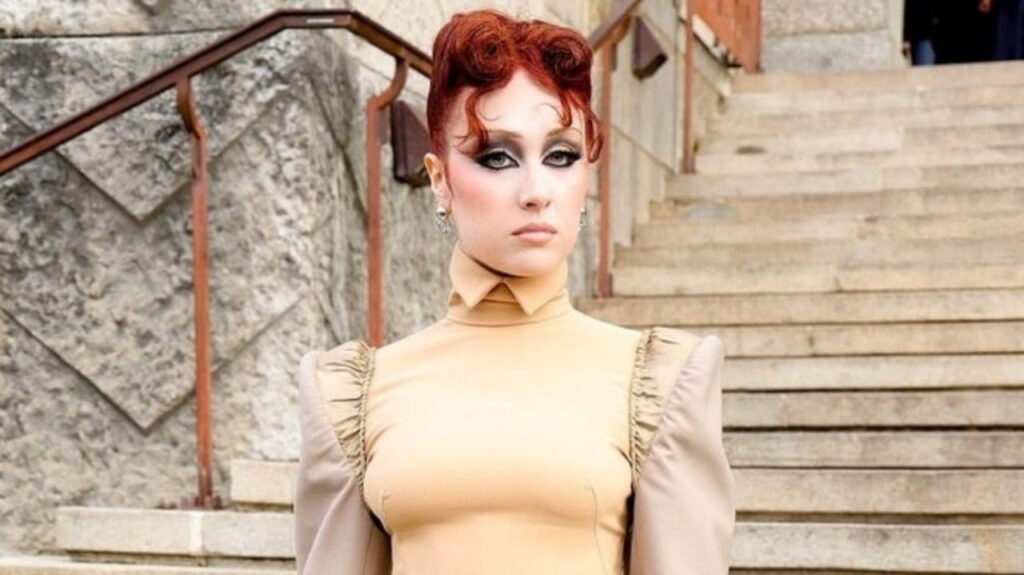
Chappell Roan is listed at approximately 5 feet 1½ inches, or 156 cm. Her most recognizable visual signatures include naturally curly red hair, bright red lipstick, dramatic white face makeup, heavily styled eye looks, and an ability to alter nearly every one of those elements when a specific character calls for it.
Height is almost secondary in her visual language because she frequently manipulates proportion through costume.
Towering headpieces, broad historical silhouettes, corsetry, exaggerated shoulders, armor, voluminous skirts, platform footwear, wigs, and sculptural accessories can radically reshape how her figure reads onstage or on a red carpet.
Vogue has documented this approach across looks created with stylist Genesis Webb and designers ranging from Mugler and Rodarte to Thom Browne and independent artisans.
Her face is treated with similar flexibility. The familiar porcelain-white base can become clownish, Elizabethan, gothic, glamorous, or almost doll-like depending on the surrounding costume, while red curls can disappear entirely beneath blonde wigs, elaborate headwear, or color-driven transformations.
What makes her appearance especially interesting from a fashion-editorial perspective is that beauty never feels disconnected from clothing.
The makeup does not simply “match” an outfit; it helps explain the character wearing it. That distinction is why even an intentionally strange Chappell Roan look often feels visually complete rather than random.
What Is Known About Chappell Roan’s Personal Life and Relationship Status?
Chappell Roan has been open about identifying as a lesbian while remaining notably protective of the people closest to her.
In March 2025, she confirmed that she had been dating a girlfriend for around six months, describing the relationship as serious and saying they had met through a mutual friend before her fame reached its most intense level. She did not publicly identify her partner.
That privacy fits a broader boundary she has drawn between performer and private citizen.
The American pop artist has repeatedly emphasized that being recognizable does not grant strangers unrestricted access to her family, relationships, or offstage life, and she has pushed back against invasive fan behavior as her audience has expanded.
Family nevertheless remains part of her biography. Kayleigh was raised with three siblings, and her parents supported her musical interest even within the more conservative religious environment she has described from childhood.
The distinction between Kayleigh and Chappell is useful here. In an Associated Press interview,
Roan described the stage identity as a form of drag project that gives her space between the person performing and the person living an ordinary life outside that performance.
Chappell Roan’s Career Journey in the Creative Industry
Chappell Roan’s career began years before mainstream listeners encountered “Good Luck, Babe!” As a teenager, Kayleigh Rose Amstutz posted music online and attracted industry attention, eventually signing with Atlantic Records.
Her early material leaned more toward darker singer-songwriter pop, including the 2017 EP School Nights, rather than the high-camp dance-pop aesthetic now associated with her name.
A crucial stylistic shift arrived with “Pink Pony Club.” Roan began working with producer Dan Nigro, and the song introduced a brighter, more openly queer vision inspired by finding freedom and belonging in Los Angeles.
Commercial success did not arrive immediately. She was dropped by Atlantic, returned to Missouri for a period, worked ordinary jobs, and continued rebuilding her career rather than abandoning the project.
Singles such as “Naked in Manhattan,” “My Kink Is Karma,” “Casual,” “Red Wine Supernova,” and “HOT TO GO!” gradually clarified both the musical sound and the visual universe around Chappell Roan.
Her debut album, The Rise and Fall of a Midwest Princess, arrived in September 2023, combining synth-pop, dance-pop, emotional balladry, queer storytelling, and deliberately theatrical performance.
Opening for Olivia Rodrigo on the GUTS World Tour in early 2024 introduced the Missouri-born songwriter to significantly larger rooms.
At roughly the same time, “Good Luck, Babe!” accelerated her audience growth, while festival performances transformed songs that had been building slowly online into mass sing-alongs.
Recognition followed. At the 2025 Grammy Awards, Roan won Best New Artist and used her acceptance speech to call for better financial and healthcare support for developing musicians.
Her debut album and “Good Luck, Babe!” received additional nominations across major Grammy categories.
The next phase showed that the momentum was not tied to a single album cycle. “The Giver” debuted at No. 5 on the Billboard Hot 100 in 2025, bringing country textures into her pop repertoire, while “The Subway” later debuted at No. 3—her highest U.S. chart position at that point.
The latter earned 2026 Grammy nominations for Record of the Year and Best Pop Solo Performance.
Her commercial profile has expanded beyond recorded music as well. M·A·C Cosmetics named her a Global Brand Ambassador, connecting her established love of drag makeup and transformation with a major beauty company; in 2026, the partnership extended into VIVA GLAM-related work.
Digital entertainment became another lane when Fortnite selected the Grammy-winning performer as its Festival Season 13 Icon in 2026.
Epic recreated several recognizable Chappell Roan aesthetics, including Pink Pony-inspired styling and the medieval “Roan of Arc” look, while integrating songs such as “Pink Pony Club,” “Good Luck, Babe!,” “HOT TO GO!,” and “The Giver.”
The pattern across these milestones is unusually coherent: music, beauty, gaming, fashion, and performance all reinforce the same theatrical identity rather than functioning as unrelated celebrity partnerships.
What Is Chappell Roan’s Signature Fashion Style?
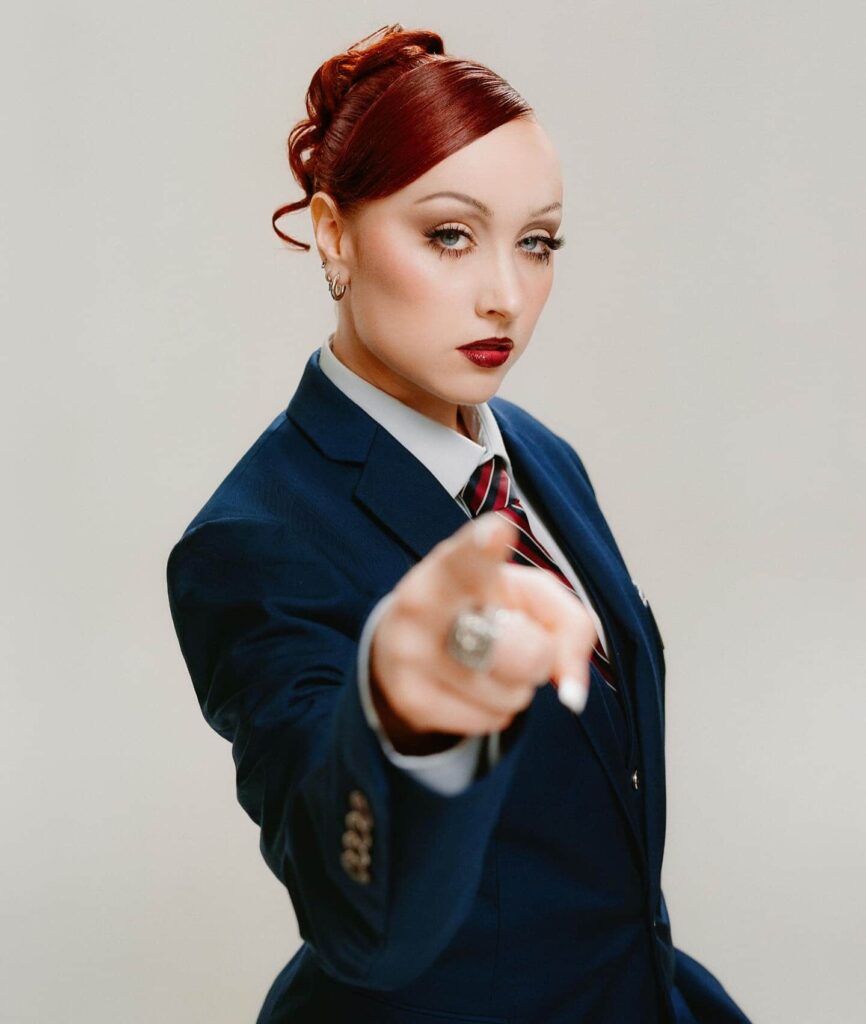
Chappell Roan’s signature fashion style is best described as campy, drag-informed theatrical fashion with strong glam-punk, historical, fantasy, burlesque, and pop-culture references.
She has directly cited drag, horror movies, burlesque, and theater as creative sources, explaining that she enjoys the tension between looking beautiful and looking slightly frightening.
There is no single uniform. One appearance might involve medieval armor; another can turn her into a green Statue of Liberty, a rodeo clown, an extravagant swan, a country diva, a porcelain doll, or a disco-era fantasy.
The consistency comes from the method rather than the garment category: each appearance is treated like costume design for a specific character.
Color operates dramatically within that system. Fuchsia, cherry red, wine, emerald and acid green, powdery white, black, silver, gold, cobalt, and theatrical pastels appear far more often than conventional beige celebrity minimalism.
Even when the palette narrows, texture takes over through feathers, leather, latex, crystals, sheer fabric, metallic armor, brocade, lace, or sculptural draping.
Her longtime collaboration with stylist Genesis Webb has been particularly influential.
Vogue describes their shared aesthetic through glam and punk references, while their work has involved designers such as Mugler, Rodarte, and Thom Browne, alongside specialized makers including leather artist Zana Bayne and designer Gunnar Deatherage.
The 2025 Met Gala demonstrated how far that visual language can stretch. Working with Oscar-winning costume designer Paul Tazewell and Webb, Roan appeared in a flamboyant fuchsia patchwork jumpsuit and coat built partly from vintage materials sourced through eBay, drawing on 1970s funk, disco, and Blaxploitation references.
At the 2026 Grammys, the strategy changed again. She wore a wine-red custom Mugler creation inspired by Thierry Mugler’s spring 1998 couture archive, using sheer draping and theatrical body detailing to reinterpret fashion history rather than simply reproduce it.
We think the strongest element of her fashion identity is its willingness to risk looking strange.
Plenty of celebrities wear expensive clothing; far fewer arrive with such a clear character concept that the viewer can imagine an entire fictional world behind the outfit.
The result is also surprisingly evergreen. Individual garments may follow a particular event or reference, but camp, drag, historical costume, theatrical makeup, fantasy, and transformation are broad creative languages rather than disposable micro-trends.
Read: Isaac Arellanes Bio, Age, Net Worth, Height & Fashion Style
What Is Chappell Roan’s Estimated Net Worth?
Celebrity Net Worth placed Chappell Roan’s estimated fortune at around $12 million in an April 2026 update.
The figure represents an outside estimate, while her visible commercial footprint spans recorded music, touring, merchandise, licensing, beauty partnerships, and entertainment collaborations.
The music catalog is the foundation. The Rise and Fall of a Midwest Princess developed substantial longevity after its initial 2023 release, while singles including “Good Luck, Babe!,” “Pink Pony Club,” “The Giver,” and “The Subway” expanded her chart presence across multiple release cycles.
Her official site continues to center that catalog alongside merchandise and music products.
Live performance adds another major layer. By 2025, her dedicated concert audiences were showing up not only for the songs but also in elaborate fan-made costumes inspired by her visual universe, a sign that the live brand had developed its own culture rather than operating as a straightforward album tour.
Then there are partnerships that extend her image into adjacent markets. M·A·C Cosmetics positioned her as a Global Brand Ambassador, while Fortnite translated several stage costumes and songs into digital items and Festival content.
Both collaborations make sense commercially because they monetize elements—makeup, transformation, music, character design—that already belong naturally to the Chappell Roan world.
That breadth matters more than any one reported number. Her commercial identity now stretches across music, live entertainment, beauty, fashion-adjacent media, merchandise, and gaming without requiring her to reinvent the underlying persona for each market.
Inside Chappell Roan’s Lifestyle, Beauty, and Daily Routines
Beauty is not simply grooming in Chappell Roan’s world; it functions as character development.
She and makeup artist Andrew Dahling have built looks by studying references, watching drag performances, sketching ideas, and using cosmetics to create a visible transformation from Kayleigh into Chappell.
Her partnership with M·A·C formalized an approach she had already been practicing for years.
That helps explain the signature white complexion, exaggerated lashes, jewel-toned shadows, drawn or blocked brows, bold lips, prosthetics, and occasional full-body color.
The beauty team is willing to alter nearly everything when a concept requires it: for The Tonight Show, for example, her familiar red curls gave way to a blonde Swan Lake-inspired transformation with feathered eye detailing and extraordinary feather-like nails.
There is something refreshing about beauty being treated as play rather than correction. Her most memorable makeup rarely aims to make the wearer look conventionally “perfect.”
Instead, it can make her look stranger, older, mythical, cartoonish, regal, ghostly, glamorous, or intentionally artificial—and that creative freedom is central to the appeal.
Her offstage lifestyle appears more deliberately grounded. The singer has worked to protect the distinction between public performance and private time, including speaking openly about boundaries with fans and stepping away from online spaces when constant attention becomes overwhelming.
Gaming offers one documented form of downtime. In a 2026 interview around her Fortnite collaboration, the Missouri-born performer said she had played the game for years and described gaming—particularly with her brother—as a way to relax and connect without turning every moment into work.
Rather than inventing a rigid skincare or fitness schedule, her public record points to something more characteristic: intensive creative preparation when Chappell is “on,” followed by deliberate attempts to preserve ordinary personal space when Kayleigh is offstage.
Interesting Facts About Chappell Roan
- Her real name is Kayleigh Rose Amstutz: Chappell Roan is a constructed stage identity rather than her legal name.
- Her stage name honors her grandfather: “Chappell” came from her maternal grandfather Dennis K. Chappell, while “Roan” was connected to his favorite song, “The Strawberry Roan.”
- She spent years building an audience before mainstream success: Her path included teenage online uploads, an early record deal, being dropped by a label, and rebuilding her career before Midwest Princess took off.
- She won the 2025 Grammy for Best New Artist: The award became her first Grammy victory after six nominations that year.
- “The Subway” became her highest-charting U.S. single at release: The track debuted at No. 3 on the Billboard Hot 100.
- She approaches Chappell Roan as a drag-inspired character: The persona helps create artistic space between elaborate performance and her private identity.
- She became a M·A·C Global Brand Ambassador: The partnership centers on cosmetics, queerness, drag culture, character building, and self-expression.
- Fortnite recreated her famous costumes: Her 2026 Festival collaboration included Pink Pony-inspired skins and a digital version of the medieval “Roan of Arc” aesthetic.
- Gaming is a real hobby, not merely a sponsorship theme: She told Them that she had played Fortnite for roughly six years and used gaming as downtime.
What Can We Learn from Chappell Roan’s Success Story?
The easiest version of Chappell Roan’s story would begin with viral songs and festival crowds. The more useful version begins much earlier—with rejection.
She released music, signed to a label, changed artistic direction, lost that deal, returned home, worked ordinary jobs, and still kept writing until the persona and music finally aligned.
That makes persistence one obvious lesson, but artistic specificity may be even more important. Roan did not solve a stalled career by sanding away the strange parts.
The opposite happened: the project became more colorful, queer, theatrical, humorous, fashion-driven, and emotionally direct.
She has also demonstrated that visibility does not require surrendering every boundary. As fame intensified, the Grammy-winning singer publicly defended a distinction between appreciating someone’s work and expecting unlimited personal access to them.
We find that combination especially compelling: persistence without blandness, ambition without abandoning privacy, and commercial growth without stripping away the eccentric visual language that made the project recognizable in the first place.
The broader takeaway is useful well beyond music. A distinctive point of view may take longer to find its audience, but once that identity is coherent enough, it can extend naturally into fashion, beauty, live performance, gaming, merchandise, and other creative spaces.
FAQ: Popular Questions About Chappell Roan
What is Chappell Roan famous for?
Chappell Roan is famous for theatrical pop songs including “Pink Pony Club,” “HOT TO GO!,” and “Good Luck, Babe!,” as well as her drag-inspired stage fashion and Grammy-winning music career.
What is Chappell Roan’s real name?
Chappell Roan’s real name is Kayleigh Rose Amstutz. She created the Chappell Roan stage name while developing a separate artistic persona for her music and performances.
Why is Chappell Roan called the Midwest Princess?
The nickname comes from her debut album, The Rise and Fall of a Midwest Princess, and the theatrical Midwestern identity she built around the project.
Conclusion
Chappell Roan has made fashion, makeup, character design, queer storytelling, and pop songwriting feel like parts of the same creative language.
From Missouri beginnings to Grammy recognition and increasingly ambitious visual collaborations, the American pop artist has built a world that is recognizable before the first note even plays—share this profile, leave a comment, and keep following where that world goes next.
1 thought on “Chappell Roan Bio: Age, Net Worth, Height & Fashion Style”
Comments are closed.