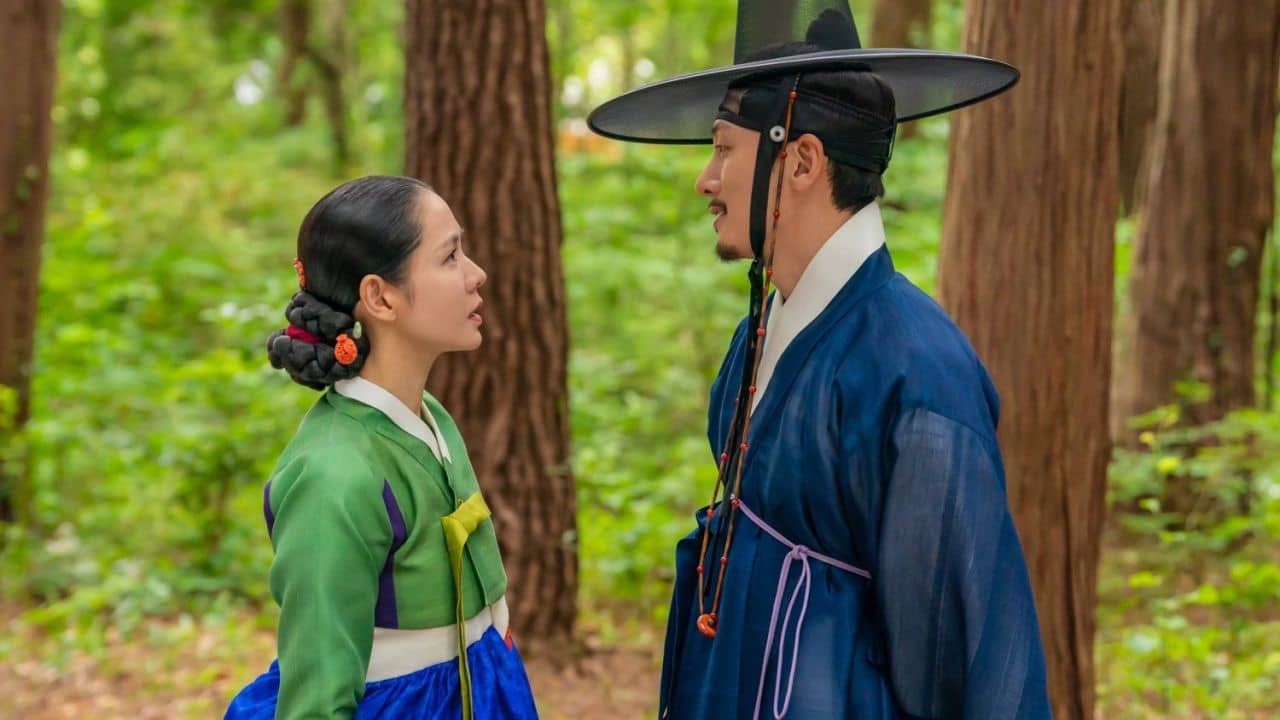
The Scandal takes one of literature’s most durable games of seduction and relocates it inside the rigid social order of Joseon, with Son Ye-jin, Ji Chang-wook, and Nana at the center.
The Netflix limited series reworks Dangerous Liaisons through Korean period drama, where private desire collides with reputation, status, and rules that leave little room for emotional honesty.
Lady Cho and her cousin Cho Won begin a dangerous wager that eventually draws the widowed Hui-yeon into their psychological contest.
What starts as manipulation becomes harder to control as genuine feelings complicate the roles each person thought they were playing.
Behind that tension was an unusually demanding production process built around physical discomfort, long conversations, withheld playback, and performances that were sometimes designed to remain unresolved.
Read: 6 My Father’s Table Facts, Behind Its Unusual Filming Choices
1. Son Ye-jin Broke a 24-Year Avoidance of Historical Drama for Lady Cho
Historical drama had been largely absent from Son Ye-jin’s career since Chihwaseon in 2002, and the reason was surprisingly physical.
She remembered the traditional hairpiece from that earlier production being held in place with pins that caused intense discomfort, while historical costumes and rigid posture made it difficult for her to concentrate fully on acting.
For years, she wondered whether the genre simply prevented her from doing her best work.
Lady Cho changed the equation. Son Ye-jin found the character layered enough to justify returning, particularly because a woman with strong desires had to maneuver inside a society that demanded restraint.
The irony was that the very wardrobe she had once associated with discomfort became part of the attraction this time: she praised the hanbok created for the production and the effort to reproduce clothing appropriate to Joseon aristocracy.
2. Director Jung Ji-woo Stopped Ji Chang-wook From Watching the Monitor
For an experienced screen actor, checking playback can be part of refining a performance. Jung Ji-woo deliberately removed that safety net from Ji Chang-wook.
The director believed the actor was so technically aware that watching the monitor encouraged him to calculate details such as pacing, line delivery, and movement from a filmmaker’s perspective rather than simply inhabiting Cho Won.
So the director asked him to stop looking. Ji Chang-wook later compared the experience to moving forward with his eyes closed while trusting someone else to guide him.
The uncertainty was frustrating, but it also produced subtler behavior between lines—the very quality Jung Ji-woo had been trying to uncover by taking away the actor’s ability to self-correct visually.
3. Their First Major Scene Together Was Filmed While Son Ye-jin and Ji Chang-wook Were Still Awkward
The production did not ease its two leads into their complicated relationship. The first scene Ji Chang-wook filmed with Son Ye-jin was already a demanding reunion between Lady Cho and Cho Won, performed before a crew he had barely gotten used to.
Instead of waiting for familiarity to develop naturally, Jung Ji-woo appears to have treated the actors’ real first-day unease as useful dramatic material.
The takes could also stretch well beyond the rhythm of conventional coverage. Ji Chang-wook recalled realizing after one exhausting session that a take had lasted more than ten minutes.
He came away convinced that every encounter between the two characters required unusually concentrated tension, prompting him to prepare even more aggressively for scenes opposite Son Ye-jin.
Read: 6 “A Love Other Than Yours” Facts, A Rescue Scene Genuinely Frightened Ahn Eun-jin
4. Ji Chang-wook Refused to Play Cho Won as an Exaggerated “Playboy”
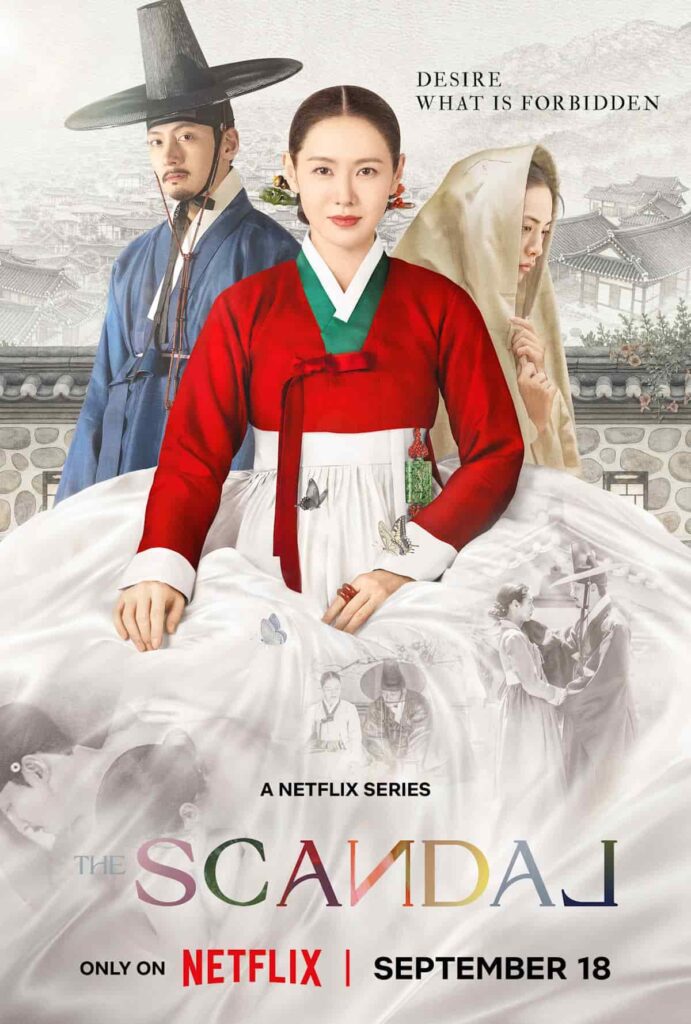
Cho Won arrives with a reputation that could easily invite a broad, swaggering performance. Ji Chang-wook went the other way.
He deliberately avoided adding obvious mannerisms simply to announce that the character was a famous seducer, preferring to let that quality emerge through behavior, posture, and the way Cho Won interacts with other people.
Even his emotional logic was left unstable. Rather than deciding exactly what Cho Won felt in advance, the actor treated individual scenes almost as separate missions and allowed contradictory impulses to coexist.
Jung Ji-woo then assembled those different approaches in the edit, leaving viewers with a man whose motives cannot always be reduced to one neat answer.
5. Nana Built Hui-yeon by Looking Back at Her Own Childhood
Hui-yeon required a different kind of reference point. Nana wanted to preserve the character’s emotional transparency and innocence rather than treating her solely as the unsuspecting target of someone else’s manipulation.
While searching for something personal to anchor the performance, she realized that Hui-yeon reminded her of aspects of her own childhood personality.
That memory became part of her preparation. Instead of constructing every emotion externally,
Nana repeatedly returned to the person she remembered being as a child—a version of herself she associated with openness and direct feeling.
Jung Ji-woo later described the actress as becoming deeply immersed in Hui-yeon’s emotional state during production.
6. The Production Deliberately Saved a Difficult Intimate Scene for Late in the Schedule
One of Cho Won and Hui-yeon’s most sensitive sequences was not filmed early. Ji Chang-wook explained that the intimate scene with Nana was pushed as far back in the schedule as practical, allowing the performers to build familiarity through the rest of their work together first.
By the time the cameras reached that material, they already had an established working bond.
He also resisted treating physical appearance as the main objective. Ji Chang-wook said he did not intensify his workouts simply to look more impressive for scenes involving nudity, because a polished romantic-hero image would have worked against the character the director wanted.
The focus remained on the scene’s emotional function rather than presenting Cho Won as visually perfect.
7. Jung Ji-woo Did Not Want to Simply Recreate the 2003 Film
Comparisons with Untold Scandal were inevitable. The 2003 Korean film had already translated Pierre Choderlos de Laclos’s Dangerous Liaisons into a Joseon setting, but Jung Ji-woo approached the new Netflix project as a fresh construction rather than a scene-for-scene recreation of that movie. His central creative question was why this story should be retold now.
The expanded series format gave the production far more time to investigate shifting motives among Lady Cho, Cho Won, and Hui-yeon.
Son Ye-jin also pointed to that additional space as a major distinction, since an eight-episode drama can linger on psychological changes that a two-hour film has to compress.
The result treats seduction less as a single scheme than as a chain of changing motives whose consequences keep mutating.
FAQ: Popular Questions About The Scandal
How many episodes does The Scandal have?
The Scandal has eight episodes.
Is The Scandal based on Dangerous Liaisons?
Yes. The Scandal reimagines Pierre Choderlos de Laclos’s 1782 novel Dangerous Liaisons within Joseon-era Korea.
Where can you watch The Scandal?
The Scandal is available exclusively on Netflix.
Final Thoughts on The Scandal
The Scandal works with an uncomfortable idea: people can understand the rules governing desire and still fail completely at understanding their own.
Lady Cho, Cho Won, and Hui-yeon move through a culture obsessed with restraint, yet the emotions they attempt to control keep altering the balance of power between them.
By filtering a centuries-old French story through Joseon society and the heightened intimacy of an eight-part K-drama, Netflix gives the material another cultural life rather than simply preserving an earlier adaptation.
Tell us which performance or scene stayed with you most, and share your favorite moment in the comments.