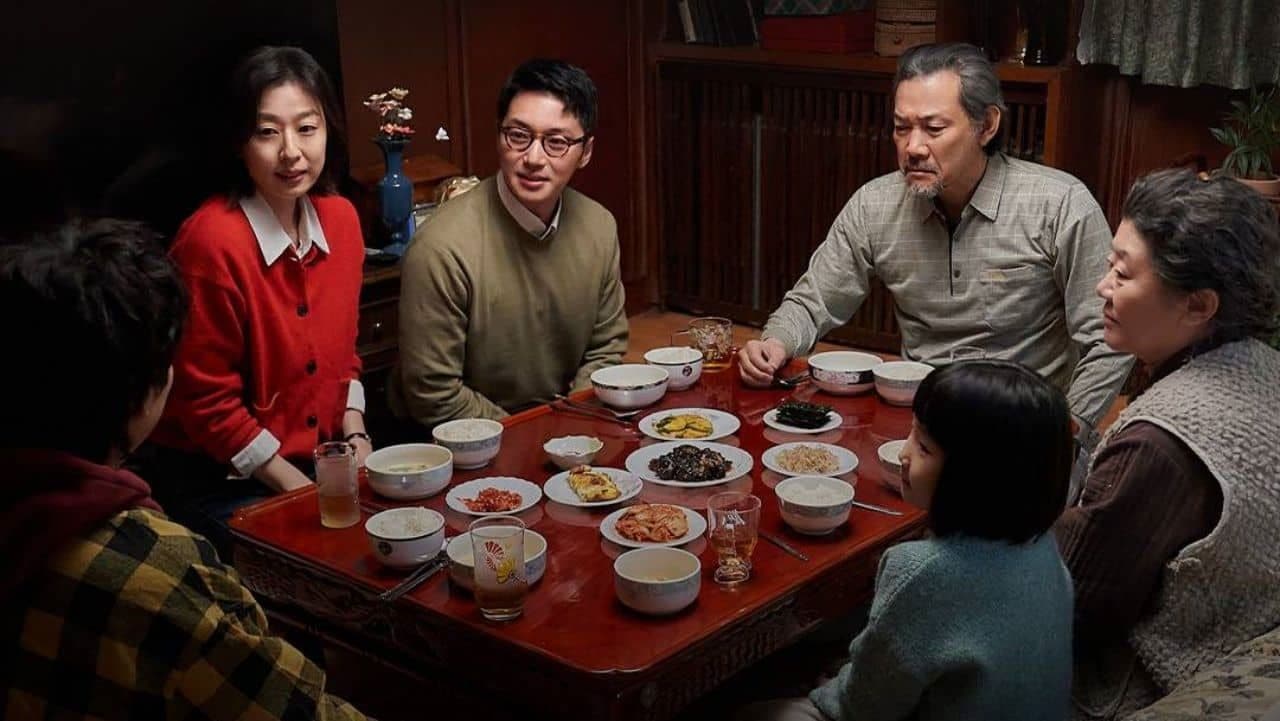
My Father’s Table attracted attention by putting a veteran filmmaker’s family drama into a format built for phones.
The King and the Clown director Lee Joon-ik took on vertical, short-form storytelling, bringing an established filmmaker’s reputation to a corner of entertainment often dismissed as disposable.
His subject was considerably more grounded than the experiment might suggest: an aging couple and the work behind a home-cooked meal.
Ha-eung, played by Jung Jin-young, has spent decades expecting his wife’s cooking until Soon-ae, played by Lee Jung-eun, can no longer prepare their meals.
His reluctant move into the kitchen disrupts a household that has treated her labor as automatic.
These six behind-the-scenes stories reveal the improvised cooking, personal observations, and unexpected decisions behind that domestic upheaval.
Read: 6 “A Love Other Than Yours” Facts, A Rescue Scene Genuinely Frightened Ahn Eun-jin
1. The On-Screen Meals Were Cooked Next Door, Without a Food Stylist
Behind the family meals was a decidedly improvised kitchen. Filming took place in a redevelopment area of Seoul’s Eungam-dong, where the house lacked working cooking facilities and even the bathroom had no running water.
Without a food stylist, members of the directing team prepared dishes on portable gas burners in the next room.
Jung Jin-young felt the makeshift setup did not compromise the storytelling and even suited its home-cooking spirit.
For a production about recognizing the effort behind a meal, having colleagues do the actual cooking just outside the scene feels especially appropriate.
2. Jung Jin-young Asked AI About Acting for Short-Form Drama
An AI system received a rather specific acting question from Jung Jin-young: how does performing in short-form drama differ from performing in longer productions? It returned a detailed explanation of the differences.
He nevertheless approached the role without treating short-form and long-form acting as separate disciplines, concentrating on expressing the character’s emotions.
That approach also shaped the comedy. Jung Jin-young resisted overacting for easy laughs, favoring a serious emotional foundation instead.
Ha-eung could be funny without the actor treating his predicament as a joke—a useful distinction when the humor depends on someone discovering how much he does not know.
3. Lee Jung-eun Found Soon-ae’s Frustration in Her Own Mother’s Kitchen
A complaint at home gave Lee Jung-eun a direct route into Soon-ae. Her mother had grown tired of cooking, while her father continued to eat three meals a day at home.
The actress thought about both parents while playing the part and recognized a shift in their relationship as her mother began resisting an arrangement in which her father had traditionally held the authority.
That personal reference gives Soon-ae’s frustration a specific context: repeated work, fixed expectations, and the moment someone finally objects to doing what everyone else considers normal.
Read: 5 Facts About The Ordinary Jackpot, How the Director Created Office Tension Without Villains
4. The Vertical Frame Changed How the Actors Could Move
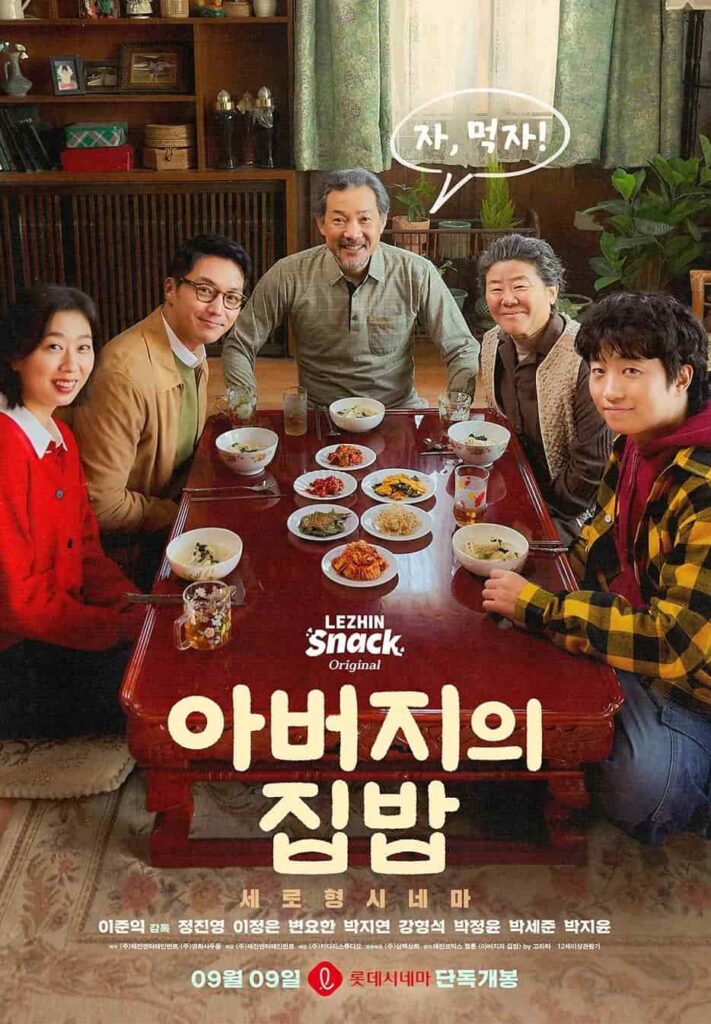
Side-to-side movement was suddenly something to ration. With a narrow vertical picture, Lee Joon-ik limited lateral movement and used frequent cuts when a conversation could not comfortably accommodate the people speaking within the same shot.
The format shaped the staging, not simply the dimensions of the finished image.
The director found a useful comparison in painting: horizontal works often depict landscapes, while vertical ones tend toward portraits.
He saw the narrow composition as an opportunity to examine a person’s inner life more closely.
For a family drama, that offered an appealing trade-off: less room to survey the surroundings, more attention available for the face in front of the camera.
5. Younger Filmmakers Pushed Lee Joon-ik to Try the Format Himself
The nudge came from filmmakers he had been encouraging. Lee Joon-ik had supported younger creators making smaller, lower-budget short-form projects as conventional filmmaking opportunities became harder to secure.
They turned the suggestion back on him, teasing him about why he was not making one himself—and whether directing commercial movies meant he looked down on the format.
He took the point. But he also wondered whether his comparatively gentle storytelling could hold attention in a space associated with sensational plots.
His response was to bring a warm family story into the format, giving each short installment its own compact narrative arc while trying to attract viewers who would not normally watch short-form drama.
The experiment concerned the kind of story the format could accommodate, not just its screen dimensions.
6. A Festival Audience Helped Turn a Phone Drama Into a Theatrical Release
The screen kept going black. The audience stayed. At the Bucheon International Fantastic Film Festival, the episodic version played consecutively with black intervals between installments.
Jung Jin-young recalled that nobody walked out, despite the extended presentation of a project originally intended for short-form viewing.
A conversation over dinner afterward helped turn that response into a theatrical release plan.
The team removed the interruptions and reedited the material as a continuous feature, retaining the vertical image rather than converting it into a conventional widescreen presentation.
A production initially intended for Lezhin Snack had found a route to Lotte Cinema through the reaction of people sitting together in a theater.
FAQ: Popular Questions About My Father’s Table
Is My Father’s Table based on a webtoon?
Yes. It adapts the webtoon of the same name by Gorita, published on Lezhin Comics.
How many episodes does My Father’s Table have?
The original short-form series consists of 61 episodes.
Who plays the eldest son in My Father’s Table?
Byun Yo-han plays Myeong-bok, the eldest son of Ha-eung and Soon-ae.
Final Thoughts on My Father’s Table
The sharpest question in My Father’s Table is not whether Ha-eung can learn a recipe, but why he took the person preparing his meals for granted.
Cooking becomes a practical test of attention: noticing the work, accepting responsibility, and returning to do it again tomorrow.
Within Korean family drama, its distinctive place comes from pairing an older couple’s domestic life with a viewing format designed for phones.
Share your favorite scene in the comments, especially the moment that made an ordinary meal feel different.
1 thought on “6 My Father’s Table Facts, Behind Its Unusual Filming Choices”
Comments are closed.